
PROCEDURES
IUDs - but not your 'normal' IUD page
This isn't your usual IUD information page. There is plenty of information available about how IUDs work, their risks and benefits - this page is about the experience of actually having one inserted. My aim is to help you know what to expect, understand the different types of pain you might feel, and explore the practical things we can do to reduce discomfort wherever possible. From preparation, pain relief and local anaesthetic to positioning, pelvic-floor relaxation, distraction and simply taking our time, there are lots of small things that can make a difference. We can't promise a pain-free insertion, but we can make a plan together, and make sure you remain in control throughout.
MAKING IT EASIER
Small things can make a big difference
There isn’t one magic solution that makes IUD insertion pain-free. Instead, we can use lots of small things together to make the experience easier - from preparation and pain relief to positioning, local anaesthetic, distraction and taking our time.
Prepare
Knowing what to expect and making a plan beforehand can make the whole experience easier.
Position & relax
Good positioning, a gentle examination and relaxing your pelvic floor can make a surprisingly big difference.
You’re in control
We can adapt, slow down, pause or stop at any point — you remain in control throughout.
Pain relief
Pain relief, heat and local anaesthetic can reduce different parts of the pain — although they can’t remove every sensation.
Distract & ground
Music, breathing, something to squeeze—or some “vocal local”—can help with anxiety, tension and pain.
Timing & technique
Cycle timing, IUD choice, gentle technique and sometimes ultrasound can help make insertion easier.
Why do I care about your experience?
IUDs are great medical tools. For the right person they can provide excellent contraception, help manage heavy or painful periods, and form an important part of hormonal treatment.
But I also hear about people who have had painful, frightening or distressing insertion experiences — sometimes when more preparation, support, pain relief or simply taking more time might have helped.
I don't want to cause unnecessary pain or trauma.
Having an IUD inserted is a medical procedure, and some discomfort or pain may still occur even when we do everything we can. But that doesn't mean pain should simply be dismissed as something you have to put up with.
I want everyone considering an IUD to have the opportunity to access its benefits with good information, appropriate pain-relief options, practical support and a sense of control over what is happening to their body.
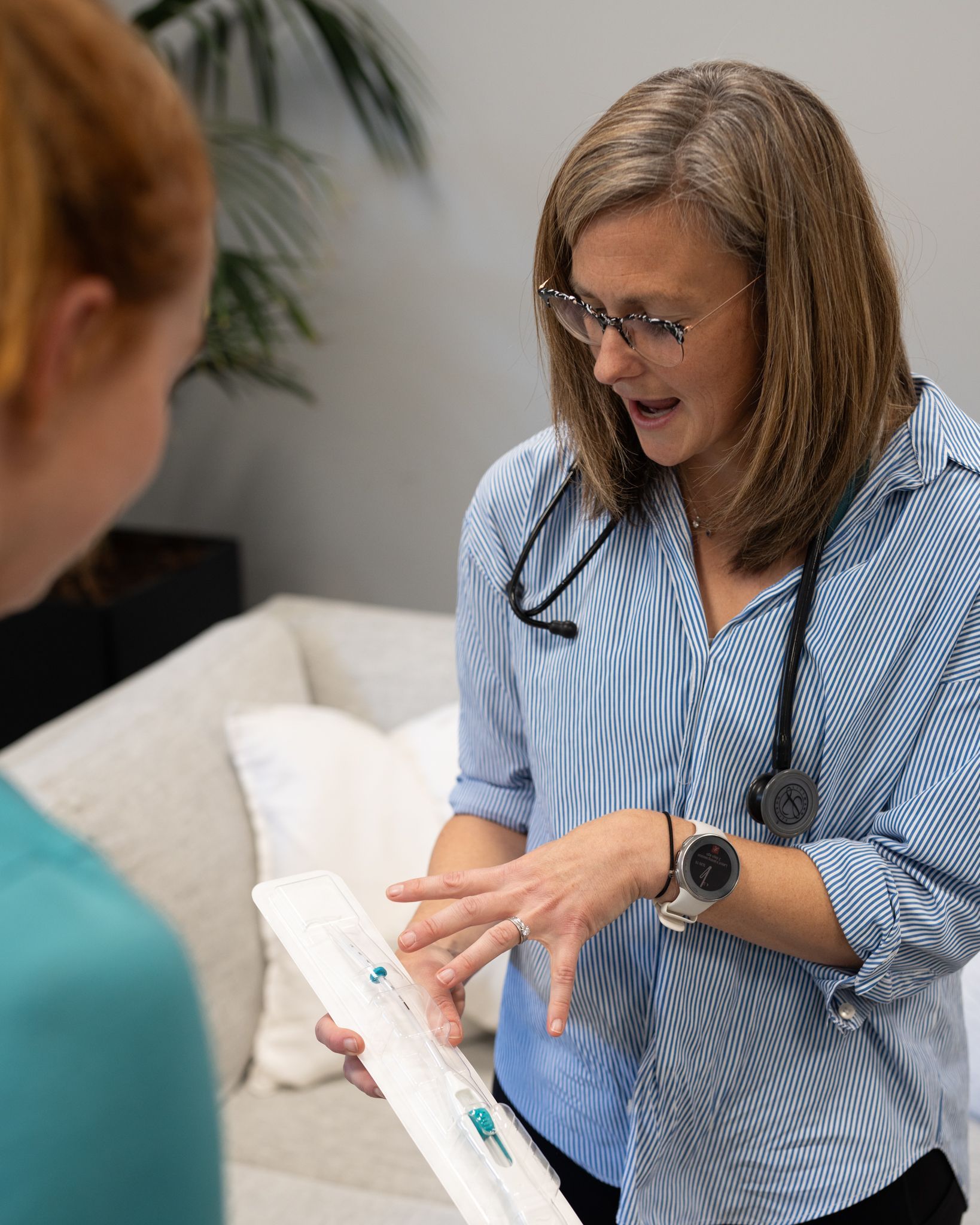
Prepare
Knowing what is going to happen can make a real difference. Pain isn't only influenced by what is physically happening to our body — anxiety, anticipation, previous experiences and not knowing what is coming next can all affect how we experience it.
Before your appointment, have a look at my TikTok videos @femalegp where I talk through what to expect. You may also find my Pipelle information on femalegp.co.nz useful. A Pipelle isn't the same procedure, but there are similarities: a speculum examination, passing a small instrument through the cervix and potentially experiencing a deeper uterine cramp.
On the day, eat and drink normally unless we've specifically advised you otherwise. Arriving hungry, dehydrated or already feeling faint isn't helpful.
And please tell us if you're worried. In particular, let me know if you've previously experienced painful smears or speculum examinations, painful sex or penetration, difficulty using tampons, pelvic pain or pelvic-floor tightness, or if you've had a difficult or painful IUD insertion before.
That information doesn't make you a "difficult patient". It helps me plan a different approach before we even begin.
I often spend longer talking to you, understanding your concerns and getting you comfortable than the actual insertion takes.
That's not wasted time. It's part of the procedure.
You are in control
We're doing this with you, not to you.
You don't have to prove you can tolerate pain, and starting the procedure doesn't mean you have to finish. We can slow down, change position, pause or stop at any time. You can choose how much — or how little — you want to know along the way.
A good IUD insertion isn't necessarily one where you feel nothing. Pain can still happen despite doing everything we reasonably can. What matters is that you feel prepared, listened to, supported and in control.
IUDs are fantastic medical tools, and I want everyone who could benefit from one to have the opportunity to do so — without unnecessary pain or trauma.
We can't promise a pain-free insertion, but there are lots of small things we can do together: preparation, pain relief, local anaesthetic, heat, positioning, pelvic-floor relaxation, distraction, gentle technique and, importantly, time.
There isn't one magic solution. Let's work out what will help you.
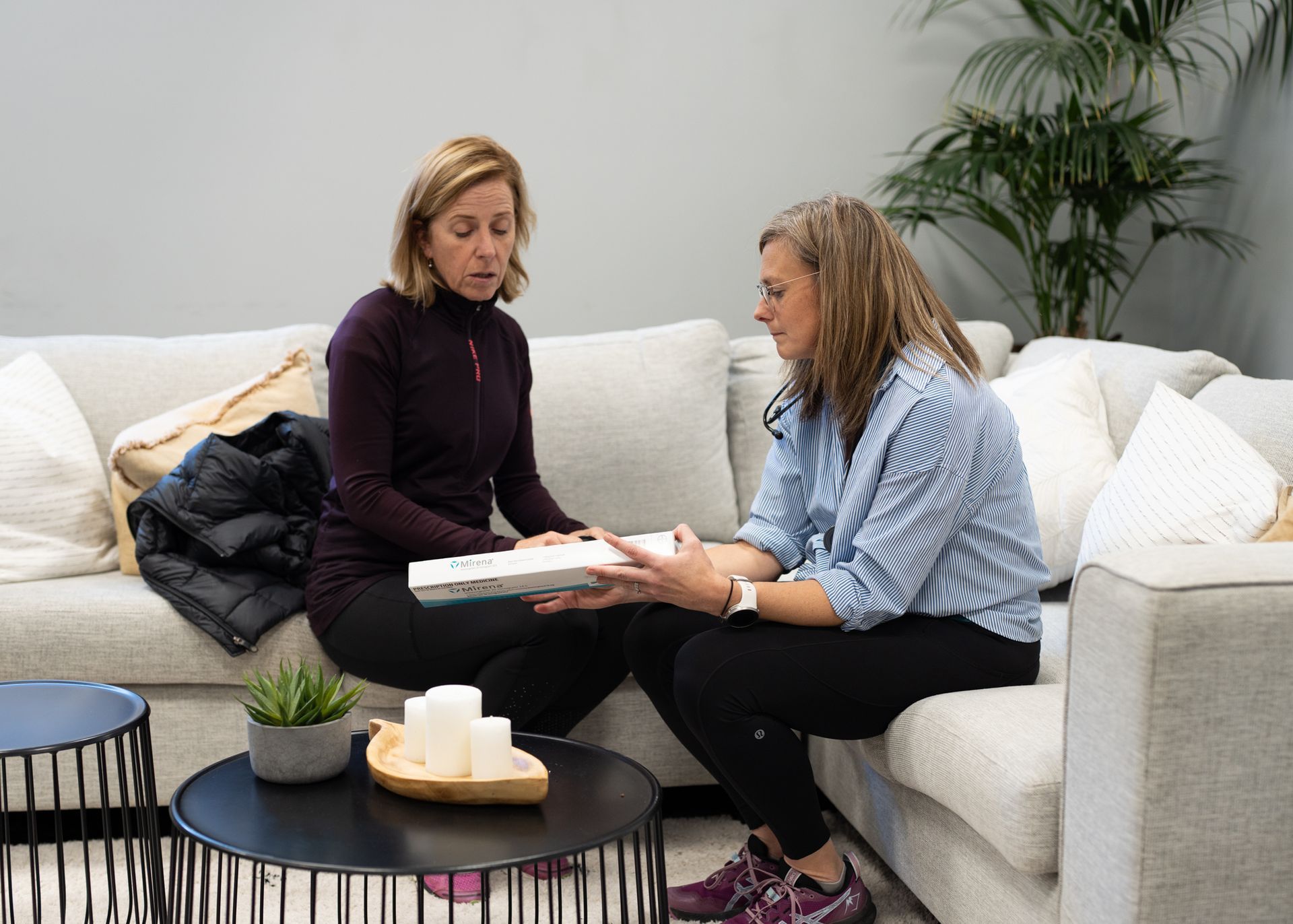
Position & relax
working with your body, not against it
This is something I think we sometimes underestimate.
Before putting in a speculum, I usually start with a gentle internal examination. That tells me two useful things (and more).
Firstly, it helps me understand the position and direction of your uterus. Uteruses don't all point in exactly the same direction, and knowing where we're going before we start can make the procedure more straightforward. Secondly, I can get a sense of what your pelvic-floor muscles are doing. If you're frightened and anticipating pain, it's completely understandable for your legs, bottom, abdomen and pelvic floor to tighten. But trying to put a speculum through muscles that are actively guarding isn't going to make the experience easier. So we take some time.
I tend to use stirrups, because your legs are supported rather than you having to actively hold them apart.
We can adjust your position until you're comfortable and your hips and pelvic floor can relax. Slow breathing can help too. Rather than simply telling yourself to "relax", think about allowing your legs to become heavy, dropping your bottom into the bed and letting your pelvic floor soften as you breathe out.
Sometimes these apparently small things make a surprisingly big difference.
If speculums, smears, penetration or sex have previously been painful or difficult — for any reason — you are welcome to let me know, but you don't need to explain why. Knowing what has or hasn't worked for you before can help us plan differently. We can take more time, use local anaesthetic before the examination where appropriate, change the equipment or positioning, pause whenever you need to, and remember that you can ask us to stop at any point.
The aim isn't to persuade your body to tolerate the examination — it's to work with your body and respond to what it's telling us.
Add your title here
This is a paragraph.
Timing & Technique
The practical stuff matters too
There are some practical factors that can make an insertion more straightforward.
Timing
If we have some flexibility, I often find insertion can be technically easier around ovulation or towards the end of your period, when the cervix may naturally be a little softer and more open.
That's my clinical observation rather than a guarantee of less pain. Research hasn't shown that having an IUD inserted at a particular stage of the menstrual cycle reliably reduces insertion pain.
So if the timing works — great.
But please don't worry about finding the "perfect" day.

The IUD itself
The size of the device and its insertion system can also matter.
For example, Jaydess is smaller and has a narrower insertion system than Mirena, which can sometimes make insertion technically easier (and the copper IUD is stiffer)
That doesn't automatically mean Jaydess is the right IUD for you. We also need to think about why you're having an IUD, your bleeding pattern, contraception requirements and how long you want it to last.
What if we've tried before and couldn't get it in?
A previous unsuccessful insertion doesn't mean we simply do exactly the same thing again and hope harder.
We can reconsider the whole plan.
That might mean a different pain-management approach, more time, cervical preparation in selected circumstances, a different IUD, or ultrasound guidance.
Ultrasound can sometimes be particularly useful where the anatomy or direction of the uterus makes insertion difficult, and there is evidence suggesting ultrasound-guided insertion may reduce pain and procedure time in selected circumstances. (At this point I refer on to a Gynaecological Colleague!)
Gentle technique
“Gentle” isn't simply about going slowly. It's about understanding your anatomy, noticing how your body is responding, and changing what we're doing in response.
If you know that internal examinations, smears, speculums or sex have been painful before, please tell me. We can even start by applying local anaesthetic jelly before I examine you or insert the speculum, giving it some time to work before we do anything further.
I usually begin with a gentle internal examination. This gives me really useful information before we start. I can feel the position and direction of your womb — whether it is pointing forwards, backwards or somewhere in between — and plan the best direction for the speculum and IUD insertion. Sometimes something as simple as elevating your bottom, changing the angle of your pelvis or adjusting your legs can make everything much easier.
It also lets me feel what your pelvic-floor muscles are doing. If those muscles suddenly tighten or start guarding, that's your body giving us information. I don't want to push against it or simply tell you to “relax”. We stop, give you time, help you feel supported and work out what your body needs before deciding whether to continue.
The equipment matters too. There isn't one speculum that suits everybody. I have different sizes and shapes available and can choose what is most appropriate for your body. Interestingly, the smallest isn't always the most comfortable — sometimes a different shape or slightly larger speculum gives us a much clearer view and means considerably less moving around or manipulation.
The same principle applies throughout the insertion. Understanding the direction of your womb, getting your position right, choosing the right equipment and minimising unnecessary manipulation can all make a difference.
And sometimes the gentlest thing we can do is stop.
The goal isn't simply to get the IUD in. It's to give you the best chance of having it inserted safely and comfortably, while continuing to listen to you — and what your body is telling us — throughout.
Pain Relief
There isn't one medication that makes an IUD insertion pain-free. Different parts of the procedure produce different sensations, so it makes sense to use a combination of approaches.
Ibuprofen and paracetamol
You may be advised to take ibuprofen and/or paracetamol before your appointment, provided these medicines are safe for you.
It's important to understand what they can and can't do.
Ibuprofen can be useful for the period-like uterine cramping around and particularly after insertion. However, research shows that a single dose of ibuprofen beforehand doesn't reliably take away the pain of the actual insertion.
Paracetamol can also be useful as simple pain relief, particularly for discomfort afterwards, but again we can't promise it will prevent insertion pain.
So yes — take the pain relief we've recommended, and take it early enough to be working when you arrive.
But tablets aren't the whole pain-management plan.
Bring some heat
A wheat pack or heat pack is simple but can be really useful for that deeper, period-like uterine cramping.
You're very welcome to bring one with you.
Topical local anaesthetic — numbing the doorway
We can also use topical local anaesthetic around the cervix.
This is applied rather than injected, so there isn't a painful injection involved. It is a low-risk option and can reduce some of the sharper discomfort associated with touching or manipulating the cervix and passing through the cervical canal.
But local anaesthetic doesn't necessarily remove all of the pain associated with IUD insertion.
I like to describe it as:
Numbing the doorway — not the whole room.
The cervix is our "doorway", and local anaesthetic can reduce some of the sharper cervical pain.
Once we enter the uterus, however, the uterus itself can contract. This is the deeper, central, period-like cramp you may feel when we measure the uterus and place the IUD.
Local anaesthetic around the cervix can't reliably switch that sensation off.
That's why we combine different strategies rather than promising that one treatment will make the whole procedure painless.
What about an anaesthetic injection?
A paracervical block involves injecting local anaesthetic around the cervix. Evidence suggests that it can reduce pain during some parts of IUD insertion.
However, it also involves several injections and additional manipulation around the cervix. The injections themselves can be uncomfortable and, in my experience, some people are more prone to nausea, sweating, dizziness or a vasovagal/"cervical shock" response with additional cervical manipulation.
So more anaesthetic doesn't automatically mean a better overall experience.
It's an option, and we can discuss whether its potential benefits make sense for you.
What about misoprostol to open the cervix?
You may have heard of misoprostol, a medicine that can soften the cervix.
It sounds logical: soften the cervix and surely insertion should be easier?
Unfortunately, routinely using misoprostol before IUD insertion hasn't been shown to reliably reduce insertion pain or make routine insertion more successful. It can also cause cramping, abdominal discomfort and diarrhoea before you've even arrived.
For that reason, I don't routinely use it just to prevent IUD insertion pain.
There are selected circumstances where cervical preparation may be helpful — for example following a previous unsuccessful insertion — and we can discuss that individually.

Project name here
City, State

Project name here
City, State

Project name here
City, State
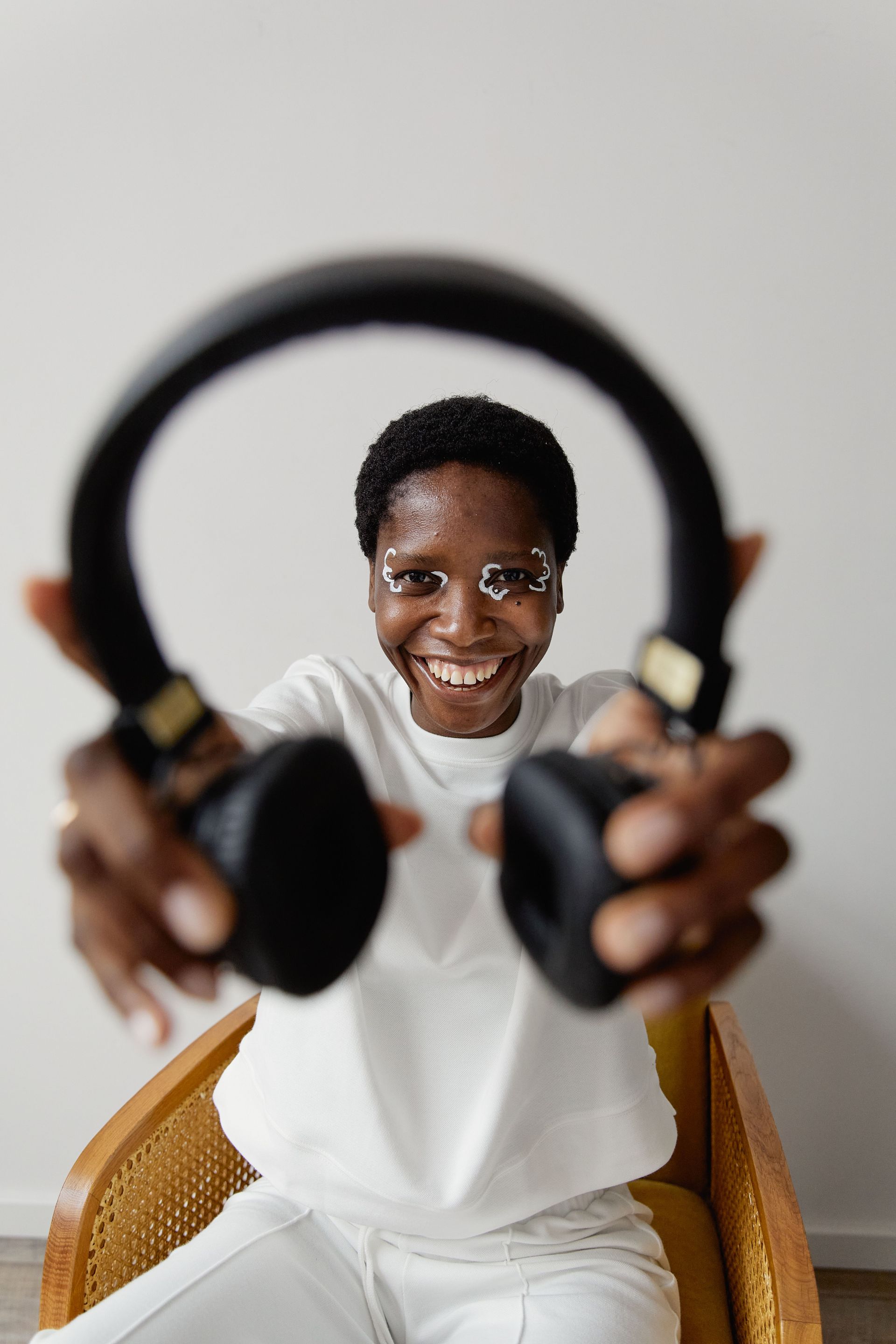
Distract & ground
Give your brain something else to do
Distraction isn't silly and it isn't pretending that pain isn't happening. Pain is influenced by attention, anxiety, expectation and our previous experiences. Giving your brain something else to focus on can therefore genuinely be part of procedural pain management.
So feel free to bring headphones. Listen to music, a favourite podcast or something familiar. There is even emerging research suggesting that music during IUD insertion can reduce anxiety and perceived pain. Bring something to hold or squeeze too — a squishy, fidget, crystal or another grounding object.
Concentrate on your breathing if that works for you. Bring a support person where appropriate.
And then there is my own 'form of anaesthetic':
"Vocal local"
I can generally talk non-stop!
Some people want me to explain exactly what I'm doing:
"This is the speculum… next I'm going to touch your cervix… you may feel a cramp now…"
Others absolutely do not want a running commentary.
We can talk about your holiday, your children, your dog or what you're having for dinner. Or put your headphones on and ignore me completely. There isn't a correct way to do this. Tell me what works for you.
When understanding the pain changes the experience
A case experience
It wasn't pain-free. But it was different.
How preparation, understanding and control transformed one young woman's experience of IUD insertion.
One of my patients first needed an IUD when she was 16. Insertion was difficult and ultimately couldn't be completed at that time — her body simply wasn't ready to let us do it. She subsequently had a Jaydess inserted, in theatre, when she was asleep, and unaware - but experienced significant pain afterwards.
Three years later, her Jaydess needed changing. She had still never been sexually active and, understandably, there was the potential for the previous experience to make another insertion feel frightening. This time, with preparation, time, support and an understanding of what she might feel, she chose to have the removal and replacement awake.
It wasn't that she felt nothing.
What was different was that she understood the sensations, knew what was happening, knew she could pause or stop, and discovered that she could manage the pain. She came away feeling empowered rather than frightened by it.
For me, that's an important reminder that a good procedural experience isn't necessarily one where there is no pain. Sometimes it's an experience where someone feels heard, prepared and in control — and leaves understanding their body rather than fearing it.
Frequently asked questions
Got a question? We’re here to help.
-
What information will I receive?
We will send you some information about the appointment, and you can contact us if you have any questions.
-
Why should I take ibuprofen?
Ibuprofen also helps the cervix (neck of the womb) open, making the procedure easier (and maybe even possible). The procedure is crampy because the womb is a muscle and is cramping down on the pipelle. It isn't just about being strong and coping with the pain.
-
Do you use local anaesthetic?
Local anaesthetic isn't generally used because it isn't needed. Unfortunately there isn't a pain relief option that can take away the cramps from the womb.
-
What doctor will I see?
Dr Samantha is the only practitioner doing face to face consults. She does train colleagues, and will sometimes have a clinical assistant (either a doctor or an experienced nurse), which improves your experience as the patient, but also helps with training and improving access in the community.
-
How long is the wait time?
We prioritise all referrals for a pipelle and try to get you booked within 2-4 weeks.
-
Can Dr Samantha start me on HRT at the same time?
Unfortunately this appointment is only funded for the pipelle. If you would like to find out about other services, please ask our reception team and they will be able to advise you