
MEDICATION: Progesterone in Peri
Cyclical Progesterone in Perimenopause: Keeping It Simple
One of the biggest challenges with cyclical progesterone in perimenopause?
Actually remembering to take it.
Perimenopause brain fog is real. Forgetfulness, difficulty concentrating, losing your train of thought, and struggling with routines can make even simple medication schedules challenging.
So when prescribing progesterone, I don't just think about what's physiological. I think about what's practical.
Common ways to take cyclical progesterone
- Days 1–14 of the calendar month
- Easy to remember
- Doesn't require cycle tracking
- Helpful if periods are irregular
- The last 2 weeks of your cycle
This more closely mimics the body's natural hormonal pattern, as progesterone is normally produced after ovulation during the second half of the menstrual cycle.
The challenge? Perimenopausal cycles are often unpredictable.
What do I often do in practice?
For women struggling with heavy periods, poor sleep, mood changes, migraines, irregular cycles, or simply remembering complicated schedules, I will often consider a long-cycle approach.
This usually means taking progesterone from the end of one period until the start of the next - in other words , during the time you are not bleeding.
For some women that's around 3 weeks of the month. For others, particularly later in perimenopause, it may be considerably longer.
I'm not treating a calendar. I'm treating a person.
Why not just take progesterone continuously?
Earlier in perimenopause, the ovaries are often still working — just not consistently.
I often describe this as "mixed signals to the womb."
The uterus is responding to fluctuating levels of estrogen and progesterone, which is one reason abnormal uterine bleeding becomes so common during perimenopause.
Importantly, irregular bleeding should never automatically be assumed to be "just hormones." Changes in bleeding patterns can occasionally signal endometrial abnormalities, which is why unexpected or concerning bleeding should always be assessed.
Why longer cycles can be helpful
Although not specifically described in most menopause guidelines, longer progesterone cycles can offer practical benefits for some women:
- Better adherence
- Improved bleeding control
- Better sleep
- More stable mood (and physical symptoms)
- Less pressure to track unpredictable cycles
The best regimen is often the one that balances safety, effectiveness, and the realities of everyday life.
The transition to continuous progesterone
As periods become increasingly spaced apart and eventually stop, many women naturally transition to continuous progesterone alongside estrogen therapy.
In many ways, treatment evolves with the hormonal transition
- Regular cycles → cyclical progesterone
- Increasingly irregular cycles → often a longer cyclical approach
- No periods/postmenopause → continuous progesterone
My priorities
When discussing progesterone options, my priorities are:
✅ Safety
✅ Wellbeing
✅ Good bleeding control
✅ Better sleep and mood
✅ Making it easy enough to actually remember
Because hormones are not one-size-fits-all.
The best hormone plan isn't always the most physiologically perfect one.
It's the one that is safe, effective, practical, and works for you.

A small note for the hormone enthusiasts
There is ongoing interest in whether cyclical progesterone may offer advantages for some women.
Potential areas of discussion include:
- More physiological hormone exposure patterns
- Periods of progesterone receptor activation and withdrawal that more closely resemble the natural menstrual cycle
- Improved for breast health
For more information
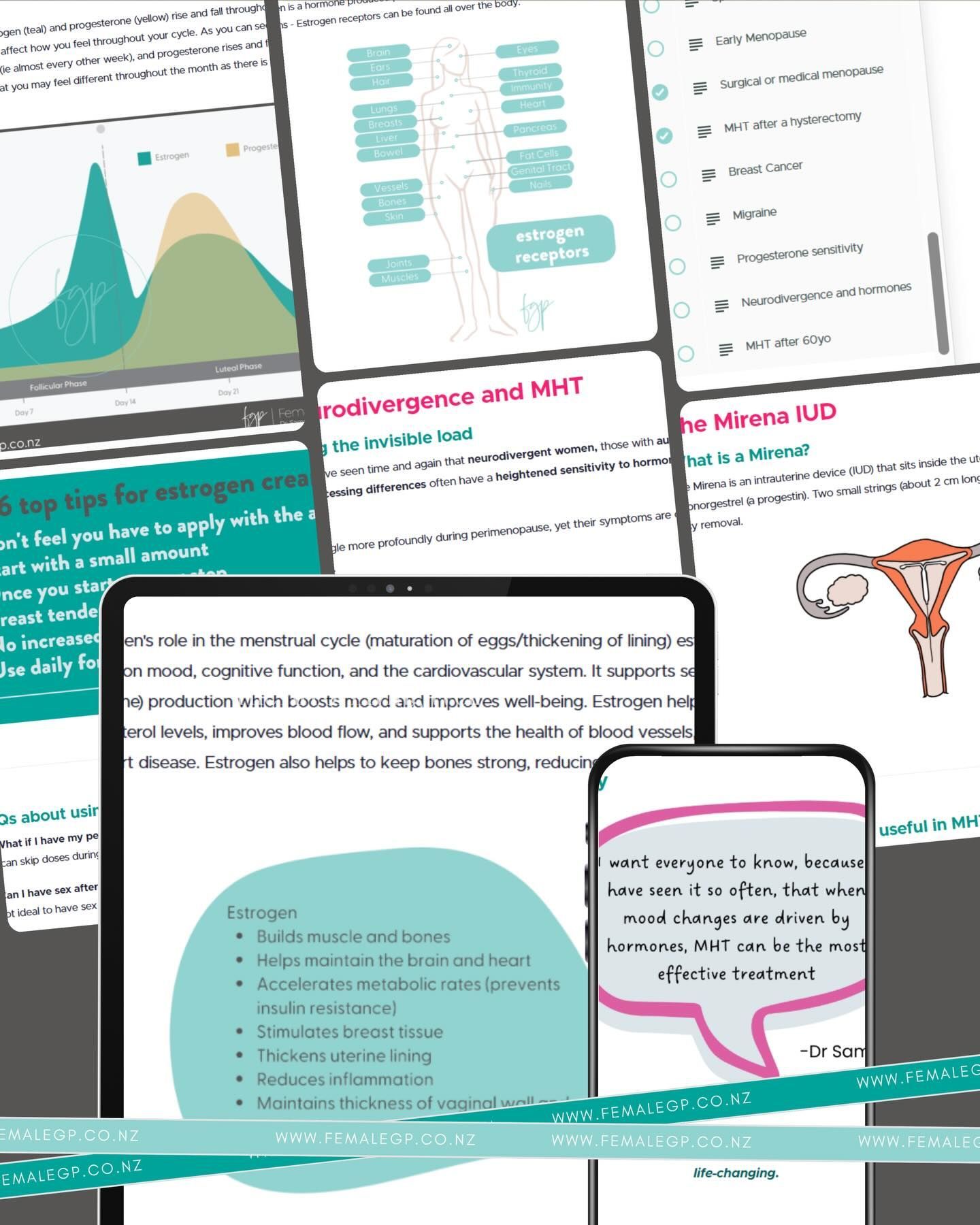
My Hormonal Hīkoi courses explore the science, lived experience, and practical realities of hormonal changes across the lifespan. They're designed to help you understand the "why" behind your symptoms, make sense of your options, and feel more confident discussing your health with your healthcare team.

Disclaimer
This information is intended for education only and should not be considered individual medical advice. Changes to hormone therapy or other medications should not be made without discussion with an appropriately qualified healthcare professional. Treatment decisions should always be individualised based on symptoms, bleeding patterns, medical history, risk factors, and personal goals.