
Why I still ask about your skin
When you come to see me for a hormonal review, we are usually talking about things like periods, mood, sleep, hot flushes, migraine, pelvic symptoms, bone health, cholesterol and all the other things that can shift through perimenopause and menopause. So why am I asking about your skin?
Not because I am pretending to be a dermatologist. I am not. But I am still a doctor, and part of my job is to notice things that might matter, even when they sit slightly outside the main reason you came to see me. Skin cancer is common in New Zealand, and sometimes the most important thing is simply noticing that something has changed.
You do not need to be able to diagnose skin cancer yourself. And I do not need to be brilliant at dermatology to know when something deserves a closer look. The useful questions are often quite simple: have you noticed any new spots? Has anything changed? Is there a mole that looks different from all the others? Is there something that keeps bleeding, crusting, itching or becoming sore? Is there a patch or lump that simply will not heal?
There are three main skin cancers people tend to hear about. Melanoma is the one we worry most about because it can spread to other parts of the body. It may start in an existing mole, but it can also appear as a completely new lesion. Things that should make you stop and look include a spot changing in size, shape or colour, becoming more irregular, or simply looking different from everything else on your skin. That “ugly duckling” idea is actually very useful. If one spot does not look like your other spots, pay attention to it. Melanoma is not always dark either. Occasionally it can be pink or quite subtle.
Squamous cell carcinoma, or SCC, often looks a little different. It may be a rough or scaly patch, a crusty area, a thickened lump or a sore that keeps breaking down. It can sometimes be tender. These often crop up on areas that have had a lot of sun over the years, such as the face, scalp, ears, forearms and hands.
Basal cell carcinoma, or BCC, is very common and usually grows more slowly. It very rarely spreads elsewhere in the body, but it can still cause significant local damage if it is ignored for long enough. It may look like a shiny or pearly bump, a pink patch, or a small sore that bleeds, scabs, seems to heal, and then does exactly the same thing again. That repeated “heals and comes back” pattern is a useful one to remember.
For most people, the biggest clue is not knowing every dermatology rule. It is knowing what is normal for your own skin. A new lesion, something that is changing, something growing, something that looks unlike your other moles, something that repeatedly bleeds or crusts, or something that just will not heal — those are all reasons to get it checked.
And do not just look at your arms and face. Skin cancers can occur on the scalp, hairline, ears, back, backs of the legs, feet and between the toes too. Ask a partner, friend or whānau member to look at places you cannot easily see yourself. Your phone can be surprisingly useful as well; a clear photo gives you something to compare against if you are not sure whether a spot is changing.
So why does this come up in a hormonal clinic? Because I am still looking after the whole person. Hormonal medicine overlaps with cardiovascular health, bone health, mental health, sexual health, metabolic health and preventative medicine. If you are sitting in front of me and mention that a mole has changed, or I notice a lesion that looks a little odd, I am not going to ignore it simply because your appointment says “menopause”.
I may not know exactly what it is, and that is okay. Sometimes my role is simply to say, “I think someone who looks at skin all day should check that.” That might be your GP, a skin clinic or a dermatologist.
You do not need to wait until you are certain something is cancer before asking. Early skin cancers can be subtle, and catching them early is exactly the point.
So as the warmer months arrive, yes, think sunscreen, hats, shade and reducing UV exposure. But also take a few minutes now and then to actually look at your skin. Know your normal, notice what changes, and if something does not look right, ask.
And one small but important side note about vitamin D. We need vitamin D for bone and muscle health, and for most people in Aotearoa New Zealand, some vitamin D comes from sunlight. The balance is sensible rather than extreme: protect your skin when UV is high, but if you have very little sun exposure, spend most of your time indoors, cover most of your skin, have darker skin, or have other risk factors for deficiency, it is worth talking to your GP about whether vitamin D supplementation is appropriate. You do not need to deliberately sunburn or chase high-UV exposure to make vitamin D.

The “I should probably get that checked” list
New. Changing. Growing. Different from your other spots. Bleeding. Crusting. Sore. Or simply not healing.

The "ugly duckling"
Most of our moles tend to look a bit like each other. The “ugly duckling” is the one that stands out — different colour, shape, size, or simply not like the rest.
It does not mean it is melanoma, but it is a good reason to get it checked.
Be SunSmart
Cancer Society NZ has a really practical guide to sun protection, sunscreen, hats, shade and checking your skin. Their key message is to protect yourself when UV is 3 or above, and in NZ particularly from September to April
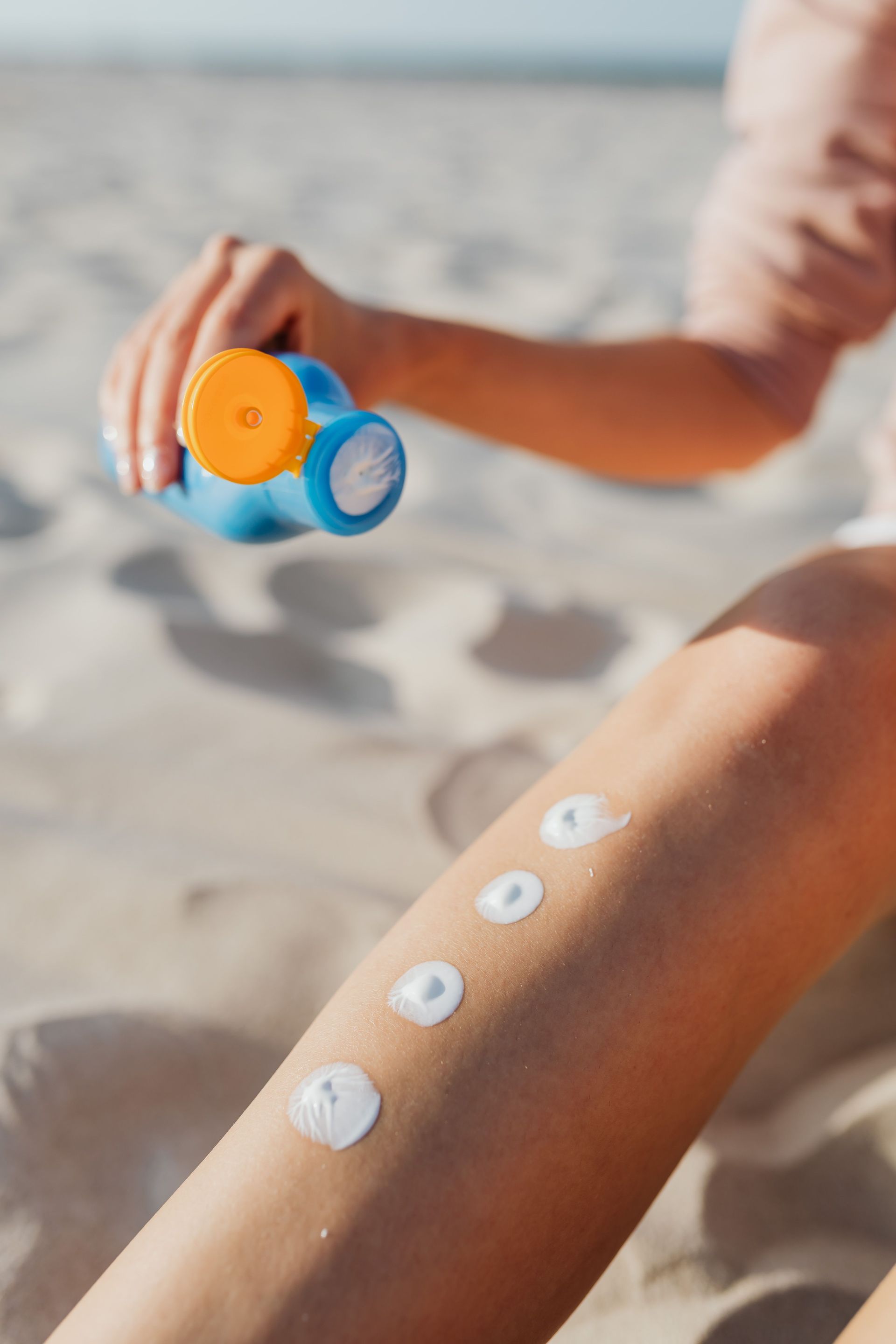
Vitamin D and sensible sun exposure
Healthify has a good NZ-specific overview of how vitamin D, skin type, season and sun exposure fit together